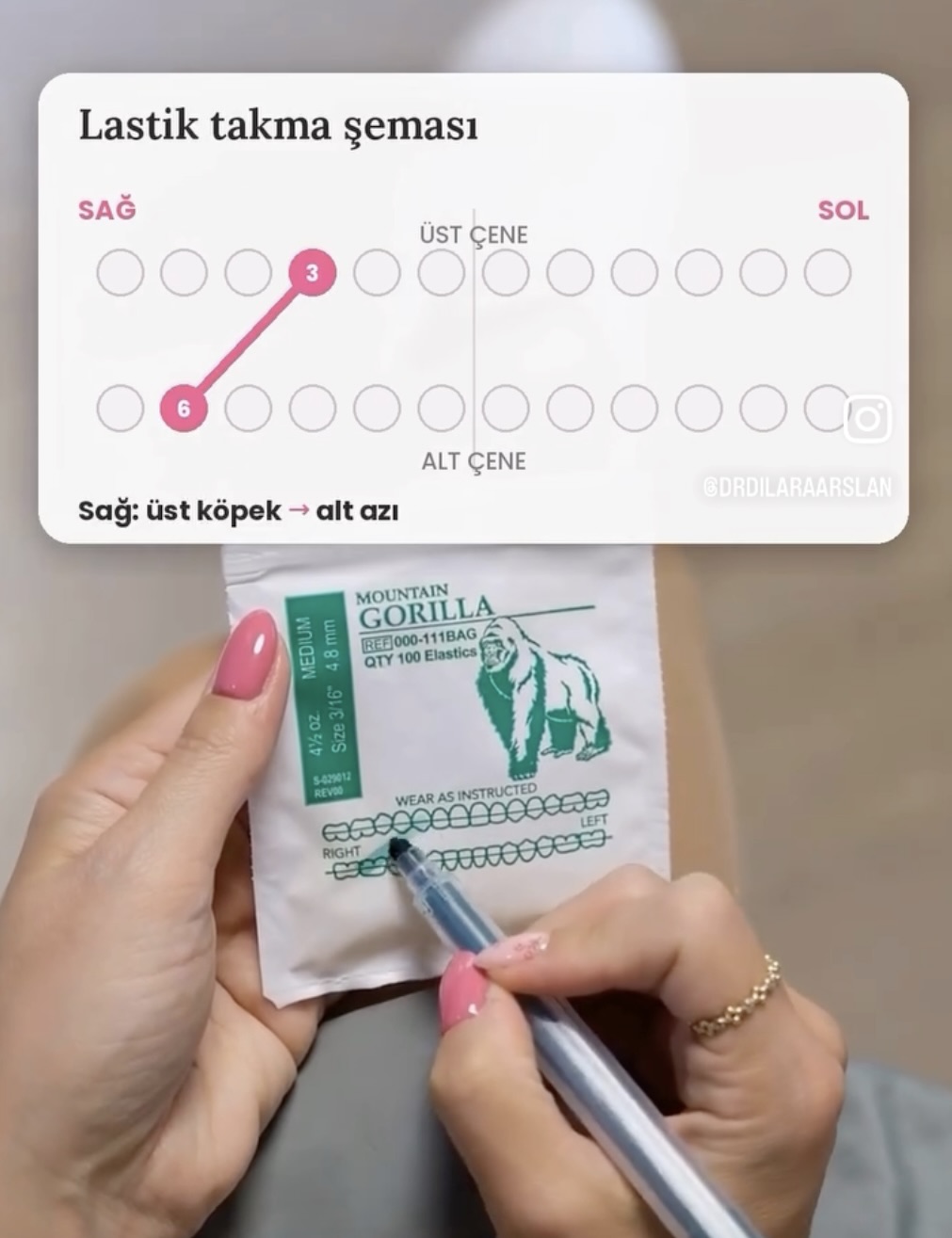
Small orthodontic rubber bands, also called elastics, may be used to help guide how the upper and lower teeth fit together. The attachment points and wear schedule are individualized.
What do orthodontic elastics do?
Elastics apply controlled forces between selected teeth or arches to help improve the bite. They can be prescribed with fixed braces and, in some cases, clear aligners.
How many hours a day should you wear them?
Some patients are instructed to wear elastics most of the day; others have a different schedule. There is no single wear duration suitable for everyone. Follow your orthodontist's instructions for placement, daily wear and replacement. Do not add extra elastics on your own.
What if an elastic breaks or you forget to wear it?
Replace a broken elastic with the correct spare if you have been instructed how to do so. Do not double up to compensate for missed wear. Contact the clinic if elastics break repeatedly, a hook is damaged or you are unsure where to attach them.
Is discomfort normal?
Mild pressure or tenderness can occur when starting elastics. Severe or increasing pain, sores or significant jaw symptoms warrant professional advice.
Why is consistency important?
Irregular wear may delay planned bite correction. Your orthodontist checks progress during follow-up appointments.
Related treatment pages
Fixed braces and clear aligners.
Related video
How to Wear Orthodontic Elastics
Appointment
If you are unsure about your elastic wear instructions, request an orthodontic review.
This article is general information. Your orthodontist's individualized instructions take priority.